

A vanity unit is a bathroom cabinet with a sink on top and a cupboard underneath, the main types of vanity units are freestanding, wall-hung, corner, cloakroom, countertop, built-in, modular, and open-shelf. Each type differs in installation method, floor footprint, storage capacity, and suitability for different bathroom sizes and layouts.
Vanity units are further categorised by basin configuration, size, width, height, depth, shape, door configuration, material, style, colour, plumbing setup, room type, combination, and budget. Each category narrows down the right unit for a specific bathroom, a specific user, and a specific set of needs.
Wall-hung units make small bathrooms feel larger. Freestanding units install without drilling. Built-in units deliver the neatest fitted finish. Widths range from 350 mm for compact cloakrooms to 1500 mm and above for large master bathrooms. Heights run from 500 mm for children’s bathrooms to 900 mm for taller users. Materials range from basic MDF at entry-level to solid wood, PVC, and solid surface at the premium end.
The most popular vanity unit in UK bathrooms is a 600 mm wide, wall-hung unit in a matt white finish with soft-close drawers, suited to most standard UK bathroom layouts and design styles.
We at Bathroom Mountain stock every type, size, style, and configuration covered in this guide, helping every UK homeowner find the right vanity unit for their bathroom from one trusted source.
What Are The Main Types of Vanity Units?

There are 8 main types of vanity units: freestanding, wall-hung, corner, cloakroom, countertop, built-in, modular, and open-shelf. Each type fits a different bathroom size, style, and storage need.
The 8 main types of vanity units are listed below:
- Floor-standing Vanity Units: Stand on their own four legs on the bathroom floor, just like a regular piece of furniture. These are the easiest to install and come in widths from 400 mm to 1200 mm, offering the most storage space.
- Wall-Hung Vanity Units: Fix directly onto the wall with no legs touching the floor. The floor underneath stays clear, which makes the bathroom look bigger and easier to clean.
- Corner Vanity Units: Sit neatly in the corner of the bathroom, using the space that usually goes to waste. Available in widths between 450 mm and 550 mm, these work best in small bathrooms.
- Cloakroom Vanity Units: Designed for tiny cloakrooms and downstairs toilets, starting from just 350 mm wide. These combine a small basin and a storage cupboard in one compact unit.
- Countertop Vanity Units: Have a basin that sits on top of the cabinet, rather than dropping inside it. This style looks very modern and stylish in contemporary bathrooms.
- Built-In Vanity Units: Fit directly into a recess, alcove, or run of bathroom furniture. These look like they were always part of the room and offer the neatest, most seamless finish.
- Modular Vanity Units: Made up of separate units that connect together, allowing full control over the layout, width, and storage configuration to suit any bathroom shape.
- Open-Shelf Vanity Units: Feature open shelves below the basin instead of cupboard doors. These keep everyday items within easy reach and add a light, airy feel to the bathroom.
What are the Types of Vanity Units by Installation?
There are 4 types of vanity units by installation freestanding, wall-hung, built-in, and countertop. The installation type determines how the unit attaches to the bathroom, how much floor space it uses, and how difficult it is to fit.
- Freestanding Vanity Units: Rest directly on the bathroom floor on four legs or a solid base, requiring no wall fixings or drilling. These are the simplest to install and move, making them ideal for renters or anyone who wants a quick, no-fuss setup. Widths range from 400 mm to 1200 mm.
- Wall-Hung Vanity Units: Bolt directly onto the bathroom wall using a concealed wall frame or bracket system. The unit floats above the floor with no legs, which makes the room feel more open and the floor far easier to mop. Wall-hung units require solid, load-bearing walls to support the weight.
- Built-In Vanity Units: Fit inside a recess, alcove, or run of fitted furniture and are fixed permanently in place. These deliver the neatest, most seamless finish of all installation types and maximise every centimetre of available space.
- Countertop Vanity Units: Sit a basin on top of the cabinet surface rather than dropping it inside. Installation involves securing the cabinet to the floor or wall and placing the basin above, making the basin the visual focal point of the bathroom.
What are the Types of Vanity Units by Basin Configuration?

There are 6 types of vanity units by basin configuration: inset, countertop, undermount, semi-recessed, integrated, and offset. The basin configuration decides how and where the basin sits on the cabinet, which affects how the unit looks, how easy it is to clean, and how much worktop space is left over.
- Inset Basin Vanity Units: Drop the basin into a hole cut into the top of the cabinet, with the rim resting flat on the surface. These are the most common type found in UK bathrooms and work with almost every cabinet style and budget.
- Countertop Basin Vanity Units: Place the basin on top of the cabinet like a bowl on a table, with no cut-out needed. These look very stylish and are a popular pick for modern and luxury bathrooms.
- Undermount Basin Vanity Units: Hide the basin underneath the worktop, so the surface stays completely flat and clean with no rim in the way. These are the easiest of all configurations to wipe down and keep tidy.
- Semi-Recessed Basin Vanity Units: Sit half inside the cabinet and half hanging over the front edge. These are perfect for narrow bathrooms, cutting the distance the basin sticks out from the wall by up to 50%.
- Integrated Basin Vanity Units: Come as one single piece where the basin and cabinet top are made from the same material, usually ceramic or solid surface. There are no joins or gaps anywhere, making these the most hygienic and seamless-looking configuration available.
- Offset Basin Vanity Units: Position the basin to one side of the cabinet instead of the middle, leaving a bigger clear worktop area on the other side. These are a great choice for family bathrooms where extra surface space for everyday items is needed.
What are the Types of Vanity Units by Size?
Types of vanity units by size are compact, small, medium, large, and double. The size of a vanity unit determines how much storage it holds, how much floor space it takes up, and whether it suits the bathroom layout.
- Compact Vanity Units: Measure between 350 mm and 450 mm wide, making these the smallest vanity units available. These fit perfectly in cloakrooms, downstairs toilets, and en-suites where floor space is very tight.
- Small Vanity Units: Range from 450 mm to 600 mm wide and work well in standard single bathrooms. These offer enough storage for everyday bathroom essentials without taking up too much room.
- Medium Vanity Units: Measure between 600 mm and 800 mm wide and are the most popular size in UK bathrooms. These strike the best balance between storage space and floor footprint, suiting most family bathrooms comfortably.
- Large Vanity Units: Range from 800 mm to 1000 mm wide and suit bigger bathrooms where extra storage and worktop space are a priority. These accommodate larger basins and provide generous cupboard or drawer space underneath.
- Double Vanity Units: Measure from 1000 mm to 1500 mm wide and feature two basins side by side. These are designed for master bathrooms and family bathrooms where two people need to use the sink at the same time.
What are the Types of Vanity Units by Width?
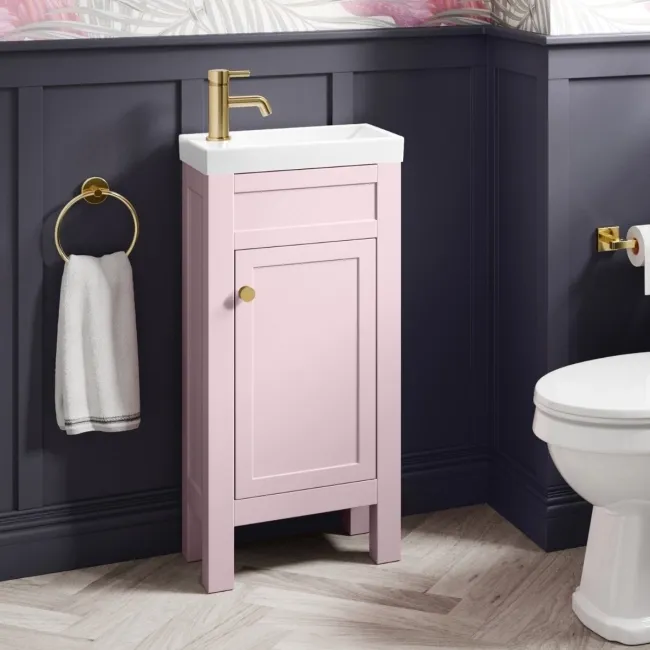
Vanity units are available in a range of widths, from 400 mm to 1500 mm and above. The width determines which bathroom size the unit fits, how much basin space it provides, and how much storage sits underneath.
- 400 mm Wide Vanity Units: The narrowest standard size available, designed specifically for cloakrooms and very tight en-suites. These fit into spaces where no other vanity unit size works.
- 450 mm Wide Vanity Units: Offer a small step up from 400 mm, providing a slightly larger basin and a little extra storage. These remain compact enough for small cloakrooms and narrow bathrooms.
- 500 mm Wide Vanity Units: Suit small bathrooms and en-suites where floor space is limited but a full cloakroom unit feels too small. These deliver a comfortable basin size without eating into the room.
- 600 mm Wide Vanity Units: The most popular vanity unit width in UK bathrooms, balancing basin size, storage, and floor footprint perfectly. These fit in almost every standard bathroom layout.
- 700 mm Wide Vanity Units: Provide extra worktop space and wider basin access compared to a 600 mm unit, without committing to a full 800 mm footprint. These work well in medium-sized bathrooms with a little room to spare.
- 750 mm Wide Vanity Units: A practical middle-ground width that suits bathrooms sitting between small and medium in size. These are widely available across freestanding and wall-hung styles.
- 800 mm Wide Vanity Units: Suit larger single bathrooms and master en-suites where a generous basin and ample under-sink storage are both needed. These accommodate wider basin styles comfortably.
- 900 mm Wide Vanity Units: Deliver a notably wide worktop and basin area, making these a strong choice for bathrooms where two people share the space regularly. These often include two or more drawers for organised storage.
- 1000 mm Wide Vanity Units: Mark the entry point into large-format vanity units, offering substantial worktop space and deep storage beneath. These suit spacious family bathrooms and master bathrooms.
- 1200 mm Wide Vanity Units: Provide enough width for a large single basin with generous worktop space on both sides, or a compact double basin setup. These are a popular choice for luxury bathrooms and master suites.
- 1500 mm Vanity Units and Above : The widest category available, designed for large master bathrooms and high-end bathroom projects. These comfortably accommodate double basins, wide worktops, and full-width drawer and cupboard storage in a single unit.
What are the Types of Vanity Units by Height?
Vanity units come in standard heights of 500 mm, 600 mm, 700 mm, 750 mm, 800 mm, and 900 mm. Vanity unit height decides how comfortable the unit feels to use every day, how well it suits the user’s height, and how neatly it lines up with other bathroom furniture.
- 500 mm High Vanity Units: The shortest standard height, best suited for children’s bathrooms and accessible bathrooms where a lower reach is important. These also work well as a base for countertop basins, where the basin itself adds extra height on top.
- 600 mm High Vanity Units: A compact height that fits well in cloakrooms and small bathrooms. These work nicely with wall-hung installations, where the fitting height adjusts to suit the user.
- 700 mm High Vanity Units: A mid-range height that suits most teenagers and shorter adults comfortably. These are a common choice in standard UK bathrooms across both freestanding and wall-hung styles.
- 750 mm High Vanity Units: The most popular vanity unit height in UK bathrooms, sitting at a comfortable working level for most adults. The majority of freestanding and wall-hung vanity units sold in the UK are manufactured at this height.
- 800 mm High Vanity Units: A taller-than-standard height that lets users stand more upright at the basin, reducing back strain during daily use. These are growing in popularity across modern UK bathrooms, especially for taller users.
- 900 mm High Vanity Units: The tallest standard height available, designed for users who prefer a fully upright posture at the basin. These are most commonly found in luxury bathrooms and bespoke fitted bathroom projects.
What are the Types of Vanity Units by Depth?

Vanity units come in standard depths of 200 mm, 250 mm, 300 mm, 350 mm, 400 mm, 450 mm, 500 mm, and 600 mm. The depth, also called projection, measures how far the unit sticks out from the wall, directly affecting how much floor space it takes up and how comfortable the basin feels to use.
- 200 mm Deep Vanity Units: The shallowest option available, designed for extremely tight spaces where every millimetre counts. These are most commonly found in narrow cloakrooms and compact en-suites where a standard-depth unit simply does not fit.
- 250 mm Deep Vanity Units: A slim-profile depth that works well in small cloakrooms and narrow bathrooms. These offer slightly more basin space than a 200 mm unit while still keeping the wall projection very low.
- 300 mm Deep Vanity Units: A popular compact depth for cloakroom vanity units and semi-recessed basin configurations. These provide a usable basin size without pushing too far into the room.
- 350 mm Deep Vanity Units: A mid-range shallow depth that suits small to medium bathrooms. These strike a good balance between a comfortable basin size and a modest floor footprint.
- 400 mm Deep Vanity Units: A versatile depth that fits most standard UK bathroom layouts comfortably. These work across freestanding, wall-hung, and corner vanity unit styles without feeling too bulky.
- 450 mm Deep Vanity Units: One of the most common depths found in UK bathrooms, offering a generous basin area and practical under-sink storage. These suit medium to large bathrooms and pair well with most standard basin sizes.
- 500 mm Deep Vanity Units: A full-depth option that provides a wide, comfortable basin and ample worktop space on either side. These are best suited to larger bathrooms where floor space is not a concern.
- 600 mm Deep Vanity Units: The deepest standard depth available, delivering the most generous basin and worktop area of all depth categories. These are most commonly found in large master bathrooms, luxury fitted bathrooms, and double vanity unit installations.
What are the Types of Vanity Units by Shape?
Vanity units are available in a range of shapes including rectangular, square, corner, curved, D-shaped, and asymmetric. The shape decides how well the unit fits into the bathroom, how much basin space it gives, and how good it looks in the room.
- Rectangular Vanity Units: The most common shape in UK bathrooms, wider than they are deep with a straight flat front. These fit into almost any bathroom layout and come in every size, style, and price range.
- Square Vanity Units: Just as wide as they are deep, giving a neat and balanced look. These work really well in small bathrooms and en-suites where a tidy, even shape fits best.
- Corner Vanity Units: Designed to sit right in the corner of the bathroom, using the space that usually gets wasted. These are a brilliant choice for small or awkwardly shaped bathrooms.
- Curved Vanity Units: Have a gently rounded front edge instead of a sharp straight face. The soft shape looks great in family bathrooms and removes dangerous sharp corners, making these safer for young children.
- D-Shaped Vanity Units: Flat against the wall at the back and rounded at the front, just like the letter D. These give more basin room than a square unit while still not sticking too far out from the wall.
- Asymmetric Vanity Units: One side is bigger, deeper, or taller than the other, creating an uneven shape. These are used in fitted and bespoke bathrooms where pipes, doors, or windows get in the way of a standard-shaped unit.
What are the Types of Vanity Units by Door/Opening Configuration?

Vanity units come in standard door and opening configurations including single door, double door, drawers, open shelf, push-to-open, soft-close, and combination. The opening configuration decides how easy the unit is to access, how organised the storage feels, and how the unit looks when closed.
- Single Door Vanity Units: Have one door that opens to one side, revealing a single storage compartment underneath the basin. These are most common on compact and cloakroom-sized units where the cabinet is too narrow for two doors.
- Double Door Vanity Units: Feature two doors that open outward from the centre, giving wider and easier access to the storage space inside. These are the most popular opening configuration across medium and large vanity units in UK bathrooms.
- Drawer Vanity Units: Replace cabinet doors with one or more pull-out drawers, making it much easier to find and reach everyday items. Drawers keep toiletries, make-up, and bathroom accessories far more organised than a standard cupboard door.
- Open Shelf Vanity Units: Have no doors or drawers at all, leaving the storage area fully open and visible. These give a light, airy feel to the bathroom and keep everyday items within easy reach at all times.
- Push-To-Open Vanity Units: Open with a gentle push on the door face instead of a handle, keeping the front of the unit completely clean and handle-free. These suit modern and minimalist bathroom designs where a sleek, uninterrupted look is the priority.
- Soft-Close Vanity Units: Feature hinges and drawer runners that slow the door or drawer down just before it closes, preventing it from slamming shut. These are quieter, gentler on the cabinet joints, and much longer lasting than standard hinges.
- Combination Vanity Units: Mix doors and drawers together in a single unit, typically one or two drawers on top with a cupboard below. These offer the best of both worlds, combining quick-access drawer storage with larger cupboard space underneath.
What are the Types of Vanity Units by Material?
Vanity units are made from carcass materials including MDF, solid wood, plywood, PVC, stainless steel, foil-wrapped MDF, and glass. The material decides how strong the unit is, how well it handles bathroom moisture, how long it lasts, and how much it costs.
- MDF Vanity Units: Made from Medium Density Fibreboard, a smooth and dense wood-based material that takes paint and wrap finishes really well. Most vanity units sold in UK bathrooms use MDF because it is affordable, easy to shape, and gives a clean, neat finish.
- Solid Wood Vanity Units: Built from real timber such as oak, walnut, or pine, giving a warm and natural look that no other material can copy. Solid wood units are heavier, stronger, and more expensive than MDF, and need proper sealing to stop them warping in a steamy bathroom.
- Plywood Vanity Units: Made from layers of wood pressed together in different directions, which makes plywood much better at handling moisture than standard MDF. These are a popular choice in higher-quality units where long-term durability matters most.
- PVC Vanity Units: Made entirely from plastic, so water cannot damage them at all. These never swell, warp, or rot, making these the best material choice for wet rooms and bathrooms with very high humidity.
- Stainless Steel Vanity Units: Built from rust-proof steel that lasts a very long time and looks sharp and modern. These are most commonly found in hotel bathrooms, commercial bathrooms, and minimalist home bathroom designs.
- Foil-Wrapped MDF Vanity Units: Use a standard MDF base covered with a thin layer of vinyl or foil in a wide range of colours and wood-effect finishes. The foil layer gives extra protection against moisture compared to plain painted MDF, making these a practical and budget-friendly choice for most UK bathrooms.
- Glass Vanity Units: Feature toughened glass panels as part of the cabinet body, creating a striking look that makes the bathroom feel bigger and more open. These are most commonly used in luxury and designer bathroom projects where appearance is the top priority.
What are the Types of Vanity Units by Style and Design Aesthetic?

Vanity units are available in styles including modern, traditional, Shaker, minimalist, industrial, Scandinavian, coastal, and art deco. The style decides how the unit looks in the bathroom, how well it matches the rest of the décor, and what kind of atmosphere the room creates.
- Modern Vanity Units: Feature clean straight lines, flat cabinet fronts, and simple handles or push-to-open doors. These suit contemporary UK bathrooms that favour a neat, uncluttered look with no fuss.
- Traditional Vanity Units: Inspired by classic furniture design, with decorative panelling, ornate handles, and warm wood or painted finishes. These feel timeless and elegant, working beautifully in period homes and classic British bathrooms.
- Shaker Vanity Units: Feature the iconic recessed panel door design borrowed from Shaker furniture, sitting perfectly between modern and traditional. These are one of the most popular vanity unit styles in UK bathrooms because they work with almost any décor.
- Minimalist Vanity Units: Stripped back to the bare essentials with no handles, no decoration, and no unnecessary detail. These create a very calm and clutter-free bathroom, where every surface is clean and simple.
- Industrial Vanity Units: Combine raw materials such as metal frames, dark finishes, and exposed hardware to create a bold, urban look. These are popular in loft-style apartments and modern city bathrooms across the UK.
- Scandinavian Vanity Units: Use light wood tones, soft neutral colours, and simple functional shapes to create a warm yet minimal feel. These suit bathrooms that prioritise a cosy, natural, and uncluttered atmosphere.
- Coastal Vanity Units: Draw inspiration from the seaside, using whitewashed wood finishes, soft blues, and natural textures. These create a relaxed, fresh feel that works well in holiday homes, beach houses, and light-filled UK bathrooms.
- Art Deco Vanity Units: Feature bold geometric shapes, high-gloss finishes, gold or brass hardware, and strong contrasting colours. These make a dramatic statement and are most commonly chosen for luxury and boutique-style bathroom projects.
- Rustic Vanity Units: Use reclaimed wood, distressed finishes, and earthy tones to create a raw, natural, and lived-in look. These suit countryside homes, farmhouse bathrooms, and any space that values character over perfection.
- Glam Vanity Units: Combine mirrored surfaces, metallic finishes, jewelled handles, and rich colours to create a bold and luxurious look. These are a popular choice for master bathrooms and dressing room en-suites where a touch of glamour is the goal.
What are the Types of Vanity Units by Colour and Finish?
Vanity units are available in colours and finishes including white, grey, black, navy, green, wood effect, cream, and two-tone. The colour and finish decide how the unit looks in the bathroom, how easy it is to keep clean, and how well it ties the whole room together.
- White Vanity Units: The most popular vanity unit colour in UK bathrooms, creating a clean, bright, and timeless look. White works with every bathroom tile, floor, and accessory colour without clashing.
- Grey Vanity Units: A close second to white in popularity, available in shades ranging from light dove grey to deep charcoal. Grey vanity units suit both modern and traditional bathroom styles and pair beautifully with chrome and brushed nickel hardware.
- Black Vanity Units: Make a bold and dramatic statement, creating a striking contrast against white walls and light-coloured tiles. These are most popular in contemporary and industrial-style bathrooms.
- Navy Blue Vanity Units: Deliver a rich, deep colour that feels both classic and modern at the same time. Navy works especially well in Shaker-style and traditional bathrooms paired with brass or gold hardware.
- Green Vanity Units: Range from soft sage and olive tones to deep forest and emerald shades. Green vanity units have grown rapidly in popularity across UK bathrooms over the last few years, bringing a natural and earthy feel to the space.
- Wood Effect Vanity Units: Mimic the look of real timber using foil wrap or printed finishes in oak, walnut, pine, and driftwood tones. These give the warmth and character of natural wood without the maintenance requirements of real timber.
- Cream Vanity Units: Offer a softer and warmer alternative to white, giving the bathroom a cosy and inviting feel. These suit traditional, rustic, and coastal bathroom styles particularly well.
- Two-Tone Vanity Units: Combine two different colours or finishes on the same unit, such as a white top with a navy cabinet or a wood-effect door with a painted frame. These add visual interest and a bespoke feel without the cost of a fully custom unit.
- Gloss Finish Vanity Units: Feature a high-shine surface that reflects light and makes the bathroom feel brighter and larger. Gloss finishes show water marks and fingerprints more easily, requiring regular wiping to stay looking their best.
- Matt Finish Vanity Units: Have a flat, non-reflective surface that hides fingerprints and water splashes far better than gloss. These are the most popular finish choice in modern UK bathrooms because of how easy they are to maintain.
- Textured Finish Vanity Units: Feature a tactile surface such as linen, concrete effect, or grain texture that adds depth and character to the unit. These are a popular choice in Scandinavian, industrial, and rustic bathroom designs.
What are the Types of Vanity Units by Plumbing Configuration?

Vanity units come in plumbing configurations including back-to-wall, exposed plumbing, concealed plumbing, left-hand, right-hand, and central waste. The plumbing configuration decides where the pipes go, how tidy the finished bathroom looks, and how easy the unit is to install.
- Concealed Plumbing Vanity Units: Hide all the pipes and waste fittings inside the cabinet, so nothing is visible from the outside. These are the most popular configuration in UK bathrooms because the finished result looks very clean and tidy.
- Exposed Plumbing Vanity Units: Leave the pipes visible underneath or around the unit on purpose, as part of the design. These suit industrial and vintage-style bathrooms where bare pipework adds character to the room.
- Back-to-Wall Vanity Units: Push flush against the wall with all pipework hidden behind the wall or inside the cabinet. These give the neatest possible finish and work especially well with wall-hung installations.
- Left-Hand Waste Vanity Units: Have the basin waste outlet positioned on the left side of the cabinet, directing the pipework down the left-hand side. These suit bathrooms where the soil pipe or drainage point sits on the left wall.
- Right-Hand Waste Vanity Units: Have the basin waste outlet positioned on the right side of the cabinet, directing the pipework down the right-hand side. These suit bathrooms where the soil pipe or drainage point sits on the right wall.
- Central Waste Vanity Units: Position the basin waste outlet directly in the centre of the cabinet, sending the pipework straight down the middle. These are the most flexible configuration because the pipework can run either left or right from the centre point.
- Twin Plumbing Vanity Units: Feature two separate waste outlets and two sets of tap holes, designed for double basin vanity units. These suit master bathrooms and family bathrooms where two people use the unit at the same time.
What are the Types of Vanity Units by Room Type and Use Case?

Vanity units are designed for specific room types including cloakrooms, en-suites, family bathrooms, master bathrooms, wet rooms, children’s bathrooms, and accessible bathrooms. The room type and use case decide which size, style, and configuration of vanity unit works best in that specific space.
The vanity unit types by room type and use case available in the UK are listed below:
- Cloakroom Vanity Units: Compact units starting from 350 mm wide, designed for small downstairs toilets and guest cloakrooms. These combine a small basin and a storage cupboard in one tight footprint where every millimetre of space matters.
- En-Suite Vanity Units: Slim and space-efficient units that fit neatly into the smaller floor area of a bedroom en-suite. These prioritise a stylish finish alongside practical storage for one person’s daily bathroom essentials.
- Family Bathroom Vanity Units: Larger and more hardwearing units built to handle heavy daily use from multiple people. These offer generous storage for the whole family’s toiletries, medicines, and bathroom accessories in one organised space.
- Master Bathroom Vanity Units: Wide, luxurious units often featuring double basins, generous worktop space, and premium finishes. These are designed for a relaxed, hotel-style bathroom experience where comfort and aesthetics matter equally.
- Wet Room Vanity Units: Built from fully waterproof materials such as PVC or marine-grade plywood to handle constant water exposure. These resist swelling, warping, and mould in environments where water splashes everywhere on a daily basis.
- Children’s Bathroom Vanity Units: Lower in height, typically between 500 mm and 600 mm, making the basin easy for young children to reach safely. These are built with rounded corners and durable surfaces that handle rough daily use without showing damage quickly.
- Accessible Bathroom Vanity Units: Designed to meet accessibility requirements, featuring wall-hung installations at wheelchair-friendly heights with open space underneath for easy access. These comply with UK Part M building regulations for accessible and adaptable bathroom design.
- Guest Bathroom Vanity Units: Stylish units that prioritise appearance over heavy storage, creating a good impression for visiting guests. These are typically compact, neat, and finished to a high aesthetic standard without needing large storage capacity.
- Home Spa Bathroom Vanity Units: Feature premium materials, statement finishes, and generous proportions to create a spa-like atmosphere at home. These are most commonly chosen for renovation projects where the bathroom is treated as a luxury space rather than a purely functional room.
What are the Types of Vanity Units by Combination?
Vanity units are available in combination types including vanity unit with basin, vanity unit with toilet, vanity unit with mirror, vanity unit with tall boy, vanity unit with back panel, and full furniture sets. The combination type decides how much of the bathroom is covered in one purchase, how coordinated the finished room looks, and how much money is saved by buying as a set.
- Vanity Unit with Basin: The most common combination, pairing the cabinet and basin together as a ready-matched set. Buying the basin and unit together guarantees a perfect fit without the need to measure and match separately.
- Vanity Unit with Toilet: Combines the vanity unit and a back-to-wall or close-coupled toilet in a single matched furniture set. These give the bathroom a fully coordinated look while saving time on sourcing separate pieces that may not match.
- Vanity Unit with Mirror: Pairs the cabinet with a matching wall mirror or mirrored cabinet above the basin. These are sold as coordinated sets where the mirror frame, finish, and proportions are designed specifically to complement the unit below.
- Vanity Unit with Mirrored Cabinet: Combines the vanity unit with a mirrored storage cabinet that mounts directly above, doubling the storage capacity of the bathroom in one purchase. These are a very popular choice in small UK bathrooms where wall space is used efficiently.
- Vanity Unit with Tall Boy: Adds a tall, narrow storage tower unit alongside the vanity cabinet, creating extra cupboard and shelf space without taking up much floor room. These suit bathrooms where under-sink storage alone is not enough for the household’s needs.
- Vanity Unit with Back Panel: Includes a matching back panel that fills the wall space between the unit and the mirror, creating a seamless furniture run from top to bottom. These give the bathroom a fully fitted and built-in appearance without the cost of bespoke joinery.
- Vanity Unit with Side Cabinet: Pairs the main vanity unit with a smaller matching cabinet on one or both sides, extending the worktop and storage across a wider section of the bathroom wall.
- Full Bathroom Furniture Set: Includes the vanity unit, basin, toilet, mirrored cabinet, tall boy, and back panels all in one matching collection. These are the easiest way to achieve a fully coordinated bathroom where every piece belongs to the same design family.
What are the Types of Vanity Units by Price and Budget?

Vanity units are available across budget ranges including entry-level, mid-range, premium, and luxury. The budget decides which materials, finishes, and features are available, and how long the unit is likely to last in daily bathroom use.
- Entry-Level Vanity Units (£50 – £150): The most affordable category, typically made from basic MDF with a painted or foil-wrapped finish and simple door hinges. These suit rental properties, guest bathrooms, and any project where keeping costs low is the main priority.
- Mid-Range Vanity Units (£150 – £400): Offer a noticeable step up in material quality, finish consistency, and hardware durability compared to entry-level units. These are the most popular price bracket in UK bathrooms, delivering a good balance between cost and quality for everyday family use.
- Premium Vanity Units (£400 – £800): Feature higher-grade MDF or plywood carcasses, soft-close hinges and drawer runners, better surface finishes, and more detailed design work. These last significantly longer than mid-range units and suit homeowners who want a quality bathroom without going into luxury territory.
- Luxury Vanity Units (£800 – £2,000+): Built from top-grade materials including solid wood, marine plywood, solid surface, and real stone worktops. These are manufactured to the highest standards with precision joinery, premium hardware, and bespoke finish options that make every unit feel unique.
- Bespoke Vanity Units (£2,000+): Fully custom-made units built to exact measurements, finishes, and configurations specified by the customer. These are designed and crafted for one specific bathroom, making these the only option when a standard off-the-shelf unit simply does not fit the space or the vision.
How to Choose the Perfect Vanity Unit Type Based on Your Needs?

Choosing the perfect vanity unit comes down to measuring the space, matching the room type, checking the plumbing, deciding on storage, picking the material, setting a budget, and choosing the style. Getting these factors right before buying saves time, money, and the frustration of fitting a unit that does not work in the space.
The key factors to consider when choosing a vanity unit are listed below:
- Measure the Bathroom First: Measure the available wall width, floor depth, and ceiling height before looking at any unit. A unit that is too wide, too deep, or too tall creates problems that no amount of good design can fix afterwards.
- Match the Unit to the Room Type: Pick a compact cloakroom unit for small downstairs toilets, a slim unit for en-suites, and a larger unit for main family bathrooms. The room type immediately narrows down which sizes and configurations actually work.
- Choose the Right Installation Type: Pick a freestanding unit for easy installation with no drilling, a wall-hung unit to make the bathroom feel bigger, or a built-in unit for the neatest fitted finish. The wall type and floor condition both affect which installation works best.
- Check the Plumbing Position: Find out where the waste pipe and water supply sit before choosing a unit. A left-hand waste unit on a right-hand pipe means expensive plumbing changes that add unnecessary cost to the whole project.
- Pick the Right Basin Configuration: Choose an inset basin for a classic look, an undermount basin for the easiest cleaning, a countertop basin for a modern statement, or a semi-recessed basin for narrow bathrooms. The basin configuration affects both the look and the daily practicality of the unit.
- Decide on the Right Size: Match the width, height, and depth of the unit to the available space. A 400 mm unit suits a cloakroom, a 600 mm unit suits most standard bathrooms, and anything from 1000 mm upwards suits a master bathroom or double basin setup.
- Think About Storage Needs: Choose drawers for everyday items like toiletries and make-up, cupboard doors for larger items, and combination units for bathrooms that need both. Open shelves suit bathrooms where quick and easy access matters more than hidden storage.
- Pick the Right Material for the Bathroom: Choose PVC or marine plywood for wet rooms and high-humidity bathrooms, solid wood or premium MDF for family bathrooms, and solid surface or stone for luxury projects. The material directly affects how long the unit lasts in a damp environment.
- Choose the Door and Opening Configuration: Pick soft-close hinges and drawer runners for a quieter and longer-lasting unit. Push-to-open doors suit minimalist bathrooms where handles would break the clean look of the design.
- Match the Style to the Rest of the Bathroom: Choose a Shaker unit for a classic or versatile look, a flat-front unit for a modern bathroom, and a decorative panelled unit for a traditional space. The vanity unit is the biggest piece of furniture in most bathrooms, so the style sets the tone for the whole room.
- Set a Realistic Budget: Entry-level units from £50 to £150 suit rental and short-term projects, mid-range units from £150 to £400 suit most family bathrooms, premium units from £400 to £800 suit homeowners who want quality that lasts, and luxury units from £800 upwards suit high-end and bespoke bathroom projects.
- Think About Long-Term Maintenance: Matt finishes hide water marks and fingerprints far better than gloss. Soft-close hardware lasts longer than standard hinges. Plywood and PVC carcasses handle moisture far better than basic MDF over time. Choosing low-maintenance materials and finishes saves effort and money in the long run.
- Consider Who Uses the Bathroom: Choose a lower height unit between 500 mm and 600 mm for a children’s bathroom, a wall-hung unit at an adjustable height for an accessible bathroom, and a double basin unit for a master bathroom shared by two people daily.
What Is the Most Popular Type of Vanity Unit in the UK?
The wall-hung vanity unit with a 600 mm width, matt white finish, and soft-close drawers is the most popular type in UK bathrooms. This combination suits the size of most standard UK bathrooms, fits almost every design style, and delivers the clean, uncluttered look that UK homeowners favour most.
Why Shop Vanity Units from Bathroom Mountain?
Bathroom Mountain stocks one of the largest selections of vanity units in the UK, covering every size, style, installation type, and budget in one place. Every unit is handpicked for quality, and our team of bathroom specialists is on hand to help find the right fit for any bathroom, any layout, and any budget.


